
Common Electrical Issues in Coastal Homes: Complete Guide
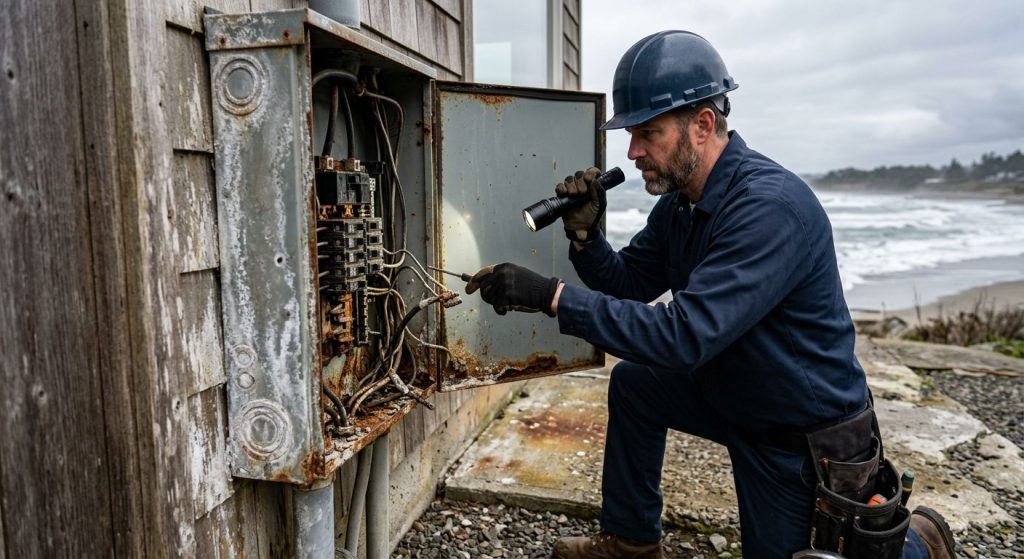
Table of Contents
- Coastal Electrical Challenges: What Homeowners Should Know
- Signs of Electrical Panel Corrosion in Beachside Homes
- Weather-Rated Materials: A Must for Coastal Electrical Installations
- Recommended Inspection Schedule for Coastal Home Electrical Systems
- Why GFCIs Fail More Often in Coastal Communities
- Effects of Salt Air on Outdoor Outlets and Lighting in Coastal Homes
- Proactive Electrical Maintenance for Lasting Coastal Home Safety
Coastal Electrical Challenges: What Homeowners Should Know
Common electrical issues in coastal homes include salt air corrosion and moisture intrusion. The salty, humid air along the coastline accelerates the deterioration of electrical panels, outlets, and wiring connections, increasing the likelihood of short circuits and ground faults. Over time, the constant exposure to salt and moisture causes metal contacts to corrode, leading to increased resistance and heat buildup.
Salt air electrical corrosion is particularly aggressive on older panels and unsealed outdoor outlets, where it can weaken connections and generate heat. Moisture-related electrical faults can escalate into serious fire hazards; according to the National Fire Protection Association, corrosion and moisture significantly raise fire risks. Homeowners should be alert to warning signs like flickering lights, warm outlets, or frequent breaker trips, and consider upgrading to corrosion resistant electrical panels where vulnerable.
Understanding these coastal challenges is the first step; we recommend regular inspections and installing a whole home surge protector to reduce the risk from lightning and power fluctuations.
Signs of Electrical Panel Corrosion in Beachside Homes
Salt air, high humidity, and persistent coastal moisture create a harsh environment for electrical systems. Among the most serious common electrical issues in coastal homes is electrical panel corrosion, which can silently deactivate critical components and pose a fire hazard. Beachside properties are especially susceptible because salt air electrical corrosion accelerates the breakdown of metal contacts, wiring, and protective enclosures.
Our electricians recommend watching for these telltale signs of panel trouble:
- Rust or discoloration on the panel door or breakers — orange-brown flaking or chalky white deposits on screw terminals indicate moisture has entered the enclosure.
- Frequent breaker trips or breakers that won’t reset — corrosion on internal contacts increases resistance and makes breakers unreliable.
- Flickering lights or intermittent power in multiple rooms — this often signals a corroded bus bar or loose, oxidized connections.
- A burning smell or unusual heat coming from the panel cover — overheating can result from corroded lugs or terminals and demands immediate professional attention.
- Water stains, condensation, or dampness around the panel box — any visible moisture suggests a compromised seal or nearby leak.
- Corrosion on terminals, lugs, or the grounding bar — even a small amount of green or white crust on these parts can compromise the safety of the entire system.
- A panel that feels hot to the touch or emits a buzzing sound — this is a red-flag indicator that corrosion has created a high-resistance fault.
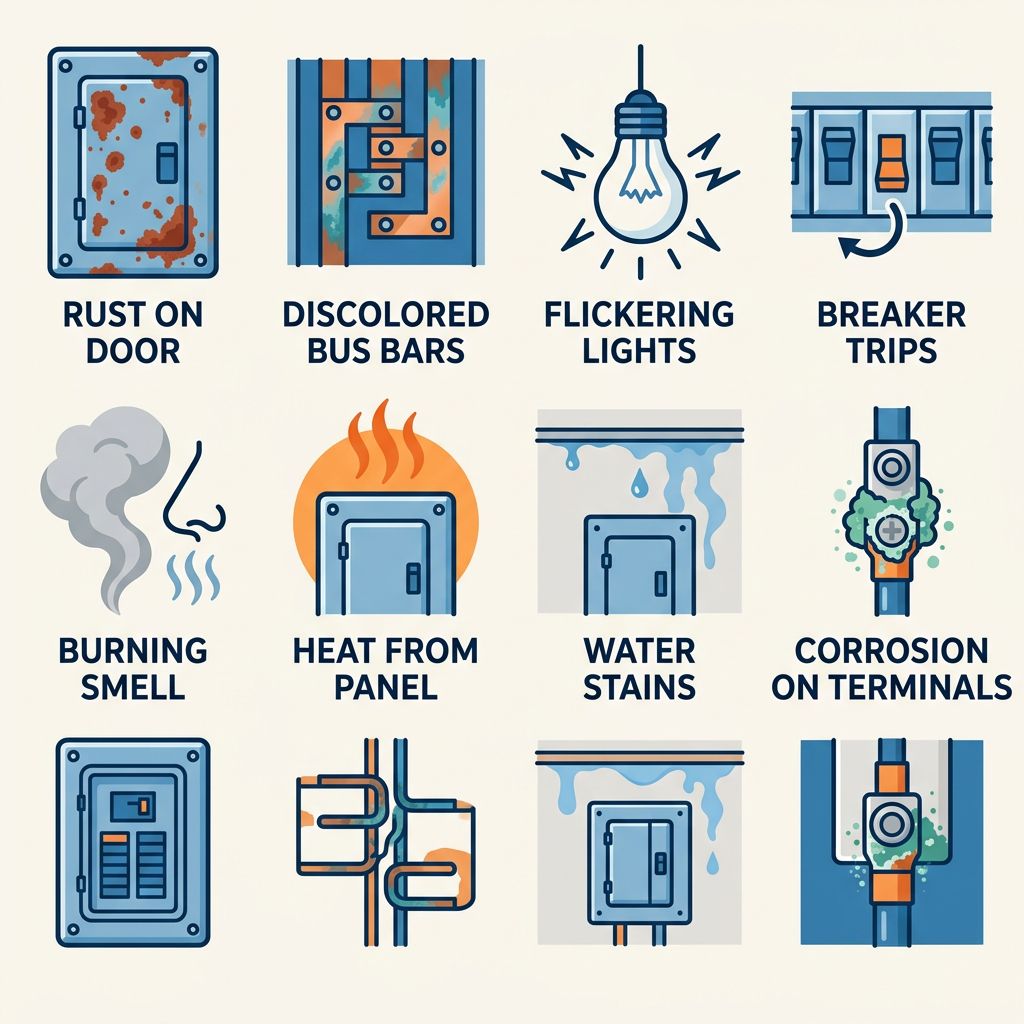
Icon set illustrating common signs of electrical panel corrosion in beachside homes.
Recognizing these warning signs is the first step toward protecting your home. In the next section, we’ll walk through the inspection process and discuss how upgrading to corrosion resistant electrical panels and other modern safeguards can shield your system from the coastal elements. If you’ve noticed any of the symptoms above, call our team today for a free written estimate and a professional, same-day evaluation.
Weather-Rated Materials: A Must for Coastal Electrical Installations
When dealing with common electrical issues in coastal homes, you quickly realize that salt-laden air and persistent moisture create a uniquely corrosive environment for standard wiring and equipment. Weather-rated materials are specifically engineered to combat these conditions, resisting moisture, salt spray, and environmental degradation. These components include enclosures that meet NEMA 3R (rain-tight) and the more rigorous NEMA 4X standards—providing superior defense against corrosion and water ingress—as well as corrosion-resistant conduits and marine-grade hardware.
Salt air electrical corrosion accelerates galvanic reactions in unprotected metal components, causing deterioration that can compromise connections and lead to short circuits, equipment failure, and even fire hazards. To mitigate these dangers, the NFPA electrical codes set forth in NFPA 70 (the National Electrical Code) include stringent mandates for protecting electrical installations in corrosive environments. Specifically, Section 300.6 requires corrosion protection for metal parts, and Article 110 mandates that equipment in wet or corrosive locations be identified and safeguarded against deterioration.
For coastal homes, we recommend corrosion resistant electrical panels featuring stainless steel or marine-grade aluminum construction, paired with PVC-coated conduits and sealed connectors that deny salt-laden air access to sensitive terminals. These weather-rated solutions, including stainless steel enclosures and marine-grade aluminum panels, form a durable barrier against the relentless assault of salt spray and humidity.
Investing in weather-rated materials may involve a higher initial cost, but the long-term savings are substantial. By preventing corrosion-related failures, you avoid the expense and inconvenience of repeated repairs, reducing the lifecycle cost of your electrical system and protecting your property’s value. Over time, these proactive upgrades pay for themselves by eliminating emergency call-outs and equipment replacements caused by salt-air damage. Our licensed electricians have extensive experience specifying and installing weather-rated materials for coastal properties throughout the Los Angeles area, including Santa Monica, Venice, and Marina del Rey. We provide free written estimates and clear upfront pricing for every project, ensuring transparency and confidence before any work begins.
In the next section, we detail the installation process for these specialized materials, showing how we apply these protections to safeguard your coastal home’s electrical system. Please consult a licensed electrician for professional advice and a site-specific assessment; individual job results and scope may vary.
Recommended Inspection Schedule for Coastal Home Electrical Systems
Building on our discussion of common electrical issues in coastal homes, it’s evident that homes near saltwater need a tailored inspection plan. Salt-laden air and persistent humidity corrode metal components much faster than inland conditions do, making regular professional oversight critical.
We recommend a minimum of one comprehensive inspection per year for coastal properties for peace of mind. For homes within a mile of the ocean, we strongly advise semiannual checkups. Salt air electrical corrosion attacks panel internals, breaker contacts, outlet terminals, and wiring, gradually undermining conductivity and safety. Even microscopic pitting can lead to resistance, overheating, and intermittent faults. Catching early-stage corrosion during these inspections helps avoid expensive repairs and hazardous conditions down the line.
Our inspections target the components most exposed to coastal moisture: the main electrical panel, all exterior outlets and light fixtures, the grounding system (rods and bonding conductors), and any exposed conduit. Visible red flags include rust on steel parts, a white or green powdery residue on copper or aluminum, flickering lights, and outlets that feel warm. In our experience, these signs often indicate corrosion-related deterioration that may eventually call for a panel upgrade or component replacement.
To reduce future vulnerability, we encourage using corrosion-resistant materials during any new installation or upgrade. Weatherproof enclosures, stainless-steel hardware, and corrosion resistant electrical panels engineered for marine environments all extend system life and lower the frequency of repairs.
A regular inspection schedule does more than prevent downtime—it safeguards your home. If an inspection uncovers aging or corroded wiring, electrical rewiring services may be the next logical step. Our team provides free written estimates before we start, so you’ll know exactly what to expect. Your family’s safety and security is our top priority, and we are dedicated to keeping your electrical system safe and efficient.
Please consult a licensed electrician for professional advice and a site-specific assessment (individual job results and scope may vary).
Why GFCIs Fail More Often in Coastal Communities
While GFCIs are essential for safety in any home, their failure rate jumps dramatically in coastal communities due to unique environmental stresses. These outages are one of the most common electrical issues in coastal homes, where salt-laden air, high humidity, and persistent moisture degrade sensitive components far faster than inland installations. Recognizing why ground-fault circuit interrupters fail near the ocean is the first step toward protecting your property from nuisance tripping, corrosion-related faults, and potentially dangerous electrical conditions.
Salt air electrical corrosion begins when microscopic salt crystals settle on the internal metal contacts and circuit boards of a standard GFCI outlet. Combined with coastal humidity, this salty residue creates a conductive film that can bridge circuits or corrode critical connections over time. Moisture ingress inside the outlet housing causes the GFCI to misinterpret harmless current fluctuations as ground faults, leading to frequent nuisance tripping even when no real hazard exists. The same condensation cycles can degrade the outlet’s internal seals, allowing more moisture and saltwater corrosion to penetrate the device and shorten its lifespan significantly. As we outlined in our guide on whole-home surge protection, coastal homes in areas such as Palos Verdes already face distinct electrical challenges that demand more resilient equipment.
To combat these coastal electrical failures, we recommend switching to corrosion resistant electrical panels and marine-grade GFCI outlets designed with sealed, non-corroding enclosures. These components resist salt spray and humidity far better than standard indoor-rated hardware, reducing unplanned tripping and extending the service life of your electrical system. Regular professional inspections are key; we can identify early signs of moisture-related GFCI problems before they become safety issues. Understanding why GFCIs fail is the first step; the next section covers how to protect your home with corrosion-resistant equipment and professional maintenance. Please consult a licensed electrician for professional advice and a site-specific assessment – your family’s safety and security is our top priority.
Effects of Salt Air on Outdoor Outlets and Lighting in Coastal Homes
Salt air electrical corrosion is a primary threat to the longevity and safety of outdoor outlets and lighting in coastal homes. The constant exposure to moisture-laden breezes carrying airborne salt particles accelerates corrosion on metal contacts, terminals, and the internal wiring of these fixtures far more aggressively than what we see in inland settings. Unlike indoor components, outdoor outlets and lights encounter the marine environment every day, making them one of the most vulnerable points in a coastal electrical system.
We frequently observe visible signs of salt-air damage during our inspections. Rust builds on metal housings, and white or green crusty deposits—the hallmark of galvanic corrosion—spread across terminals and inside outlet boxes. Homeowners may notice flickering exterior lights or outlets that work only intermittently. These symptoms often indicate that corrosive buildup is interfering with the conductive path, signaling that the components need professional attention.
The risks extend well beyond nuisance failures. As corrosion eats away at grounding connections, the protection that directs fault current safely to earth weakens. This deterioration can increase the chance of short circuits or, in severe cases, create a fire hazard. Older outlets and lighting fixtures that lack weather-resistant (WR) or marine-grade ratings deteriorate especially fast in coastal zones, turning what should be a durable system into a growing safety concern. Your family’s safety and security is our top priority, and we take these early warning signs seriously.
These challenges are among the most common electrical issues in coastal homes, but they are not problems that homeowners must simply accept. At Electricians Team Reseda, we have extensive experience upgrading outdoor wiring and fixtures to corrosion-resistant alternatives. By specifying modern, sealed components and corrosion-resistant electrical panels where needed, we can substantially reduce the impact of salt air on your system. We provide free written estimates before we start, and our licensed electricians work methodically to restore reliable, code-compliant performance to your outdoor electrical installations.
While every property is unique, our rewiring expertise and commitment to proper installation help coastal homeowners minimize salt-air damage and extend the life of their outdoor equipment. In the next sections, we will explore practical protection measures—from upgrading to WR-rated fixtures to selecting the right panel—so you can make informed decisions about hardening your home against the corrosive effects of the marine environment. (Individual job results and scope may vary.)
Proactive Electrical Maintenance for Lasting Coastal Home Safety
Common electrical issues in coastal homes arise from salt air electrical corrosion and humidity. From Reseda to Santa Monica, salt-laden moisture accelerates the deterioration of wiring, outlets, and outdoor fixtures, making proactive maintenance essential. We regularly encounter these common electrical issues in coastal homes during inspections.
Proactive maintenance includes installing corrosion resistant electrical panels and outdoor-rated equipment, plus annual professional inspections. These coastal conditions demand more frequent checks; as our blog explains, even tiny corrosion spots can cause major outages. Our licensed electricians detect hidden corroded connections and insulation breakdown before they escalate. We provide free written estimates before we start and clear upfront pricing for recommended upgrades.
Your family’s safety and security is our top priority, and our workmanship is guaranteed to meet rigorous coastal standards. Next, we’ll detail panel upgrade, safety inspection, and rewiring services that keep your home protected year-round. Call today to request a consultation and see why our loyal customers trust us as their go-to electrical experts.
Resources
- Get Corrosion-Resistant Surge Protection for Coastal Homes
- Detect and Prevent Electrical Panel Corrosion Risks
- Modernize Your Home with Licensed Electrical Rewiring
- Get a Professional Electrical Panel Upgrade for Safety
- Read Expert Electrical Safety and Code Update Blogs
- Get Professional Electrical Advice for Your Home Improvement
- Get the Best Whole-Home Surge Protector in Los Angeles
- Discover NFPA Electrical Codes and Safety Standards